
Sixty-three percent of consumers now use AI to research products before they buy — a share that has already overtaken traditional search. That single number is the starting point of WSD’s new SPARK AI Marketing Whitepaper, and it changes the only question that matters for your brand.
The question is no longer “How do we rank on Google?” It is “When someone asks ChatGPT, Claude, Perplexity or Gemini, do they recommend us — or a competitor?” This is a sharper AI marketing strategy, and it is backed by data. Here is what the whitepaper found, and why the next 12 to 18 months decide who wins AI brand visibility.
The Decision-Maker Moved — From the Consumer to the AI
The buyer’s journey used to end on a results page a human scrolled through. Now buyers hand the whole thing — discovery, evaluation, often the purchase itself — to an AI assistant. In some SaaS categories, Google organic traffic has fallen 70–80% , a shift North American marketers have started calling “The Great Decoupling”: the long-standing link between ranking and getting traffic is breaking.
B2B has moved even further. Roughly 73% of B2B buyers now use AI tools during vendor research rather than traditional search. The implication is blunt. If the AI does not name you, you are screened out before a single sales touch — there is no impression to optimize and no click to win back. You simply are not in the shortlist the model generates.
Traditional SEO Signals Barely Count to AI
This is the finding most teams do not want to hear. In Ahrefs’ study of 75,000 brands, the foundation of traditional SEO — the backlink — showed a correlation of just 0.218 with AI visibility, while unlinked brand mentions correlated at 0.664, roughly three times stronger.
In plain terms: a media outlet or community that merely names your brand — with no link attached — can carry more weight in an AI’s “mind” than years of carefully built backlinks. The same research found that brands in the bottom half for web mentions were nearly invisible to AI regardless of how strong their SEO was. SPARK rewrites the scoreboard from Share of Voice to Share of Model — the share of AI answers in which your brand gets recommended.
Where AI Visibility Is Actually Won
The platforms that feed AI answers are not where most budgets sit. Between August and December 2025, YouTube’s share of AI citations from social platforms climbed from 18.9% to 39.2%, while Reddit fell from 44.2% to 20.3% — the picture reversed completely in five months.
The gap is now an order of magnitude. YouTube appears in roughly 16% of all LLM answers — about 18 times more than Instagram and about 50 times more than TikTok ([SOURCE: study on platform appearance frequency across LLM answers 2025]). Spreading budget evenly across channels, then, hands most of your AI citation opportunity to brands that invest in deep video and authoritative sources.
Earning those third-party signals is exactly what WSD’s influencer marketing team and community work are designed to plant — credible mentions in the places models actually read.
H2 The SPARK Framework in One Pass
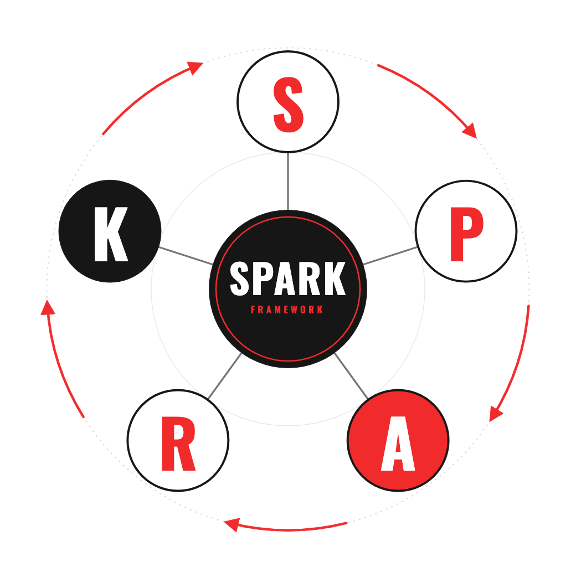
You do not need to read the full report to put the model to work. SPARK names the five capabilities a brand needs in the AI era:
● Signal — building the signals that make AI actively recommend you, not just “know you exist.”
● Presence — maintaining a real, AI-readable presence on the platforms that matter.
● Advocacy — earning third-party trust through real, citable human endorsement.
● Revenue — turning AI visibility into pipeline, including agent-driven commerce.
● Knowledge — measuring your Share of Model so you can prove ROI.
The Proof: AI Visibility Can Be Engineered
This is not theory. The landmark GEO study led by Princeton found that the right content techniques can lift AI citation visibility by up to 40%, with five individual methods each delivering 30–41% gains, and lower-ranked sites benefited more, the opposite of SEO’s winner-take-all logic. For brands that are not category leaders, that is leverage the old search era never offered.
The money is moving in step. In Q1 2026, AI-referred retail traffic grew 393% year over year, and its conversion quality already beat traditional search traffic .
Meanwhile, 94% of CMOs plan to increase AEO/GEO investment in 2026, and 97% say it has produced measurable business impact. The window is open because most brands have not moved — not because the returns are unproven.
Why the Next 12 to 18 Months Decide It
Timing is the whitepaper’s most actionable judgment. Teams already optimizing for ChatGPT, Claude, Perplexity and Gemini are months ahead of the field. By the pattern of the SEO and social eras, the citation advantage early movers build often takes latecomers several times the resources to close.
The GEO services market is projected to grow from $26.54 billion in 2026 to $6359.6 billion by 2034, a 42.9% compound annual growth rate. That figure measures less “this is a good business” than how many brands are waking up. The advantage compounds quietly, and most teams have not started the clock.
Frequently Asked Questions About AI Brand Visibility
Q: What is an AI marketing strategy for global brands?
A: It is a plan to get your brand discovered, trusted and recommended inside the major English-language AI engines — ChatGPT, Claude, Perplexity and Gemini — not just in search. It combines content built for AI citation, credible third-party signals, and a measure of how often AI names you, so your brand survives the shortlist stage that now happens inside AI conversations.
Q: What is the difference between AEO, GEO and SEO?
A: SEO optimizes your ranking in search results. AEO (answer engine optimization) structures content so an AI can extract a clear, complete answer that includes your brand. GEO (generative engine optimization) optimizes how generative engines crawl, understand and cite you.
The strategy travels under several names — AIO, GEO, AEO, LLMO, GSO — and EMARKETER notes there is no agreed definition; AIO, at most agencies, repackages existing services under an umbrella term. WSD skips the terminology war and uses one higher-order framework, SPARK, to describe every capability AI-era growth requires.
Q: Why do backlinks and paid ads matter less for AI visibility?
A: AI values different signals. In Ahrefs’ 75,000-brand study, backlinks correlated about 0.218 with AI visibility while unlinked brand mentions correlated about 0.664 — roughly three times stronger. AI rewards being discussed widely and credibly across third-party sources, so traditional rankings and ad spend alone do little to change whether the model recommends you.
Q: How long is the window to act on AI brand visibility?
A: About 12 to 18 months, judging by the SEO and early-social eras. Early movers build a citation advantage that latecomers need several times the resources to match. With 94% of CMOs increasing AEO/GEO investment in 2026, the gap is widening — which is exactly why the SPARK whitepaper treats timing as the single most urgent variable.
Q: Which platforms most influence what AI recommends?
A: Right now, video and authoritative sources punch far above their weight. YouTube appears in roughly 16% of all LLM answers — about 18 times more than Instagram and about 50 times more than TikTok — and its share of social-platform AI citations more than doubled in late 2025. Earning credible, citable mentions in these places matters more than even spend across every channel.
Q: Conclusion
A: Marketing is not getting an upgrade — the decision-maker has changed. It has moved from the consumer to the AI acting on their behalf, and KPIs, budgets and channel mix all have to move with it. Brands that read this shift early get a rare chance to overtake incumbents still optimizing for a search-first world that is quietly closing. The data is already on the table. The only open question is whether your brand is in the answer. Start by seeing where you stand in AI engines today.